What Gear Do You Need for Flag Football? A Complete Equipment Checklist
The complete flag football gear checklist: jerseys, flag belts, cleats, soft-shell helmets, mouthguards, and the extras that actually help on the field.
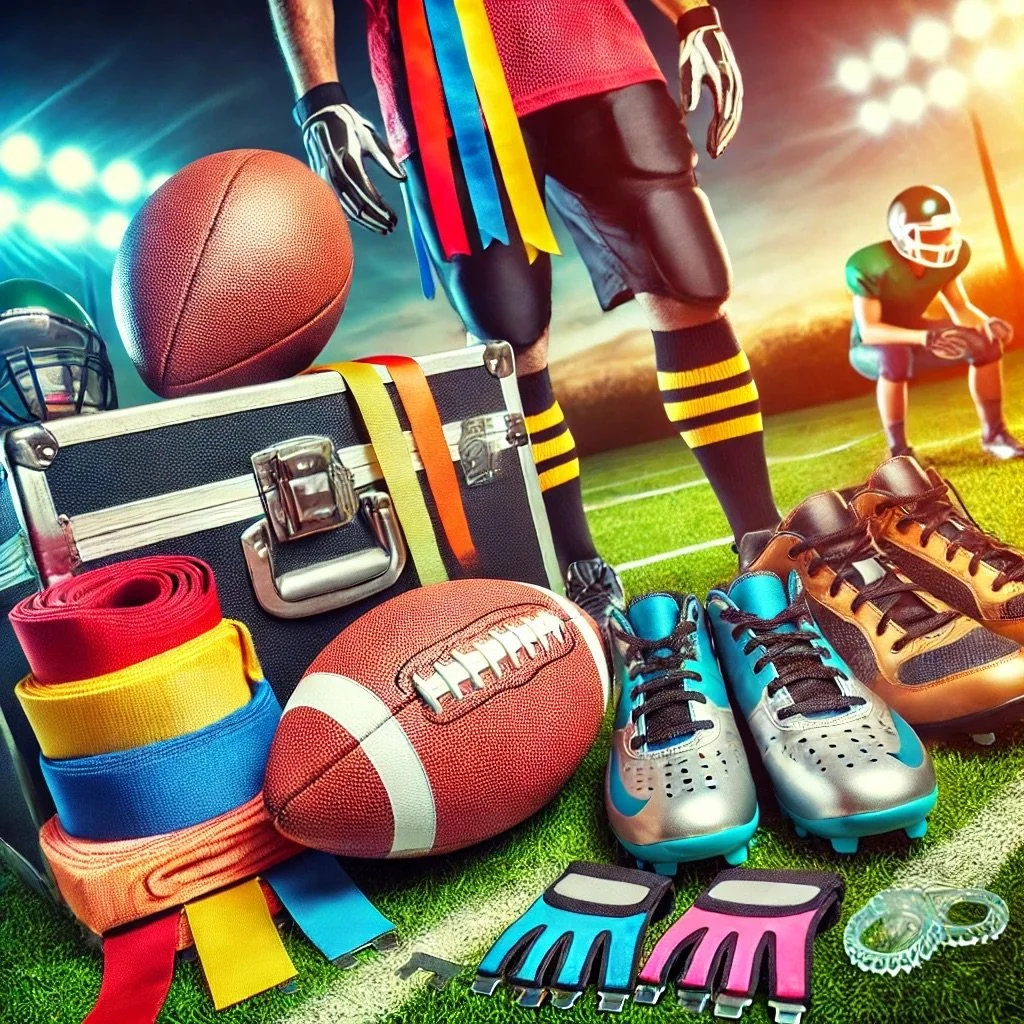
More kids are stepping onto a flag football field than ever — NFL FLAG alone has pushed past half a million players. This is the no-fluff flag football gear checklist for getting them ready, whether it’s a first season of youth flag football or a varsity squad chasing a state title.
According to NFL FLAG, here’s the flag football equipment that actually matters.
Essential Flag Football Gear Checklist
A quick note before the list: rules vary by league. NFL FLAG, NIRSA collegiate intramurals, and state high school associations each set their own standards on cleats, helmets, gloves, and jerseys. Confirm your league’s rulebook before you buy.
Flag Football Jersey
What it is and why: a breathable, moisture-wicking top built for sprinting, cutting, and pulling flags without snagging.
- Lightweight, sweat-wicking fabric. No cotton.
- Tuck-in length so your flag belt sits clean above the jersey hem (most leagues require this).
- A custom flag football jersey with names, numbers, and team logo. If you want your squad looking the part, get custom jerseys here.
Flag Belt and Flags
What it is and why: the whole sport hinges on this. The flag belt has to release cleanly when pulled, and stay put when it shouldn’t.
- Three-flag belts are now standard at most levels.
- Velcro vs. quick-release clip vs. pop-socket. Your league’s rulebook will spell out which it allows.
- Buy a backup set. Flags get lost, torn, or chewed up on a turf field faster than anyone expects.
Cleats (Non-Metal)
What it is and why: traction without the injury risk metal spikes bring to a non-contact sport.
Flag football cleats are molded rubber or turf shoes. Metal is banned at virtually every level. Low-cut shoes are lighter and let you cut quicker. Mid- or high-tops give a little more ankle support if you’ve got a history of rolling them. Turf shoes work great on artificial surfaces and double as a warm-up shoe.
Mouthguard
What it is and why: usually the only required protective piece, and the one nobody regrets owning.
Boil-and-bite is fine for most rec players. Custom-molded is the upgrade if you wear braces or want max comfort. Whatever you pick, attach it to a strap or keep a spare in the bag. They get lost constantly.
Soft-Shell Helmet
What it is and why: padded, foam-shell headgear designed to absorb incidental contact, not stop tackles.
The helmet rule has shifted. Five years ago a soft-shell was optional almost everywhere. Today a growing number of youth leagues, and more and more high school associations, either require them outright or strongly recommend them, especially for players under 12. They’re lightweight, easy to clean, and most of them slide on like a beanie. If your league requires one, the rulebook will usually spec which certifications (NOCSAE, Virginia Tech 5-star) are accepted. Don’t wait until the first practice to find out.
Shorts Without Pockets
What it is and why: pockets are a finger-injury risk and a flag-pull hazard, so most leagues ban them outright.
Pocketless athletic shorts or compression-style shorts. No basketball shorts, no cargos. If your league lets you wear leggings or compression tights underneath in cold weather, double-check whether the flag belt has to ride over both layers (it usually does).
Receiver Gloves (Worth It for Skill Positions)
What it is and why: tacky-palm gloves dramatically improve catch radius and ball security in cold or wet conditions. They’re not just a luxury — for receivers, QBs, and ball-carriers, they’re the single best skill-position upgrade you can make.
- Grip benefit is real. One-handed grabs and contested catches get noticeably easier.
- Rule check: not all leagues allow tackified or sticky-palm gloves. Some require gloves that meet a specific NOCSAE or NFHS standard. Confirm before game day.
- For QBs, light receiver gloves help ball control in the cold without killing feel on the laces.
Play-Calling Wristband
What it is and why: a velcro wristband with a clear sleeve holding your team’s play sheet.
Speeds up the huddle, kills sideline confusion, and saves the QB from forgetting a route concept under pressure. Cheap upgrade, big impact.
What You Don’t Need
Players over-buy. Skip these unless your league specifically requires them:
- Shoulder pads or rib pads. Flag is non-contact. Carrying tackle gear into a flag game looks (and plays) ridiculous.
- Football-specific gloves with hard knuckle plates. Receiver gloves yes, lineman gloves no.
- A monster gear bag full of accessories. A jersey, shorts, cleats, mouthguard, belt, helmet (if required), and gloves fits in a small drawstring. That’s it.
Where to Get the Best Flag Football Gear
You can patch a roster’s gear together from sporting-goods chains, Amazon sellers, and three different team stores. Or you can do it the easy way.
- Custom flag football jerseys and full uniforms. Names, numbers, sponsors, the works.
- Real team management. No chasing parents for sizes or order forms. Every player checks out themselves through your store.
- Faster turnaround than the legacy dealer model. No four-week quotes, no minimum-quantity nonsense.
- Direct-to-player or bulk team shipping. Whatever fits your program.
Get Your Team Geared Up with Secondslide
Stop scrambling for last-minute gear and start showing up like a program. Custom jerseys, top-tier flag belts, and the rest of the kit — without the headache.
Ready to outfit your team?
Open a free Secondslide team store, or talk to our team about your program.